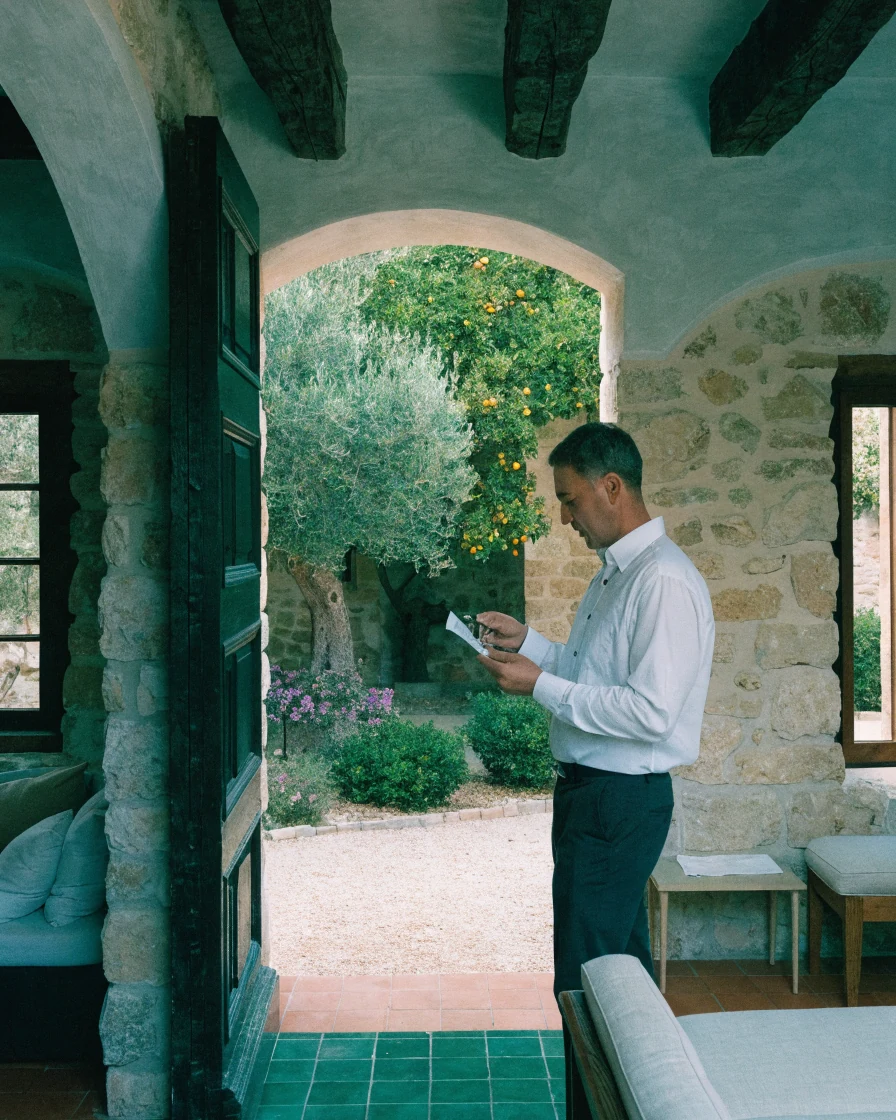
For many keyholders, the visit itself is the easiest part. The friction sits around it: finding the latest instruction, collecting the right key, working out who is responsible, and remembering to tell the owner what happened.
A repeatable workflow gives those small but important steps a place. It also makes the service easier to hand over when someone else covers the work.
01 / PREPARE
Make the task useful
before someone leaves.
“Check the house” means different things to different people. A useful task should name the home, explain the purpose of the visit and give the person carrying it out enough detail to know what a completed job looks like.
Start with the timing. Is this a routine inspection, preparation for an owner arrival, or a response to a specific request? Those are different kinds of work, and the reason matters when priorities change.
Villa Oliva · Pre-arrival check
Visit before the owner arrives on Friday. Inspect the terrace after the recent rain, check that the repaired kitchen tap is dry, and leave the outdoor cushions indoors until arrival.
- Assigned to
- Jules
- Access
- Main key set K-014
- Outcome
- Completed inspection with relevant notes
The aim is to make the next action clear. Include relevant instructions, identify responsibility and keep the brief connected to the property.
See how Keysted connects tasks and properties02 / CONFIRM ACCESS
Know which key.
Know who has it.
Access is too important to leave until someone is standing outside the home. Identify the correct physical set and check the recorded custody before the visit begins.
When the set moves, record the handover. A key history is only useful if it reflects the movements your team actually records, so make the update part of the physical handover.
- Use a consistent identifier for each physical key set.
- Keep spare sets distinguishable from the main set.
- Confirm where the key should go after the visit.
- Follow up when the expected return has not been recorded.
This simple habit becomes especially useful when cleaners, colleagues and coordinators all handle access at different points in the day.
Explore physical key custody and history03 / COMPLETE THE VISIT
Work from the brief.
Record the useful details.
At the property, start with the task and the relevant home instructions. Confirm that the work still makes sense in the situation you find. If something has changed, make the exception visible to whoever needs to make the decision.
A good update should help another person understand the outcome. “Done” can be enough for a simple task, but an inspection or maintenance follow-up often needs a little more context.
“Terrace inspected; no standing water found. Kitchen tap checked and dry. Cushions left in the utility cupboard ready for Friday’s arrival.”
Keep observations factual and relevant to the work. If an issue needs a separate follow-up, give it a clear next step instead of burying it in a completion note.
04 / CLOSE THE LOOP
Finish with the
next person in mind.
The visit may be complete, but the workflow still needs a handover. Update the task status, complete any required key return and make sure the owner request has an understandable outcome.
The next person might be the coordinator arranging tomorrow’s work, a colleague covering the next visit or the homeowner reviewing what happened. Leave the information in the property context so each can find what is relevant.
- Update the work status accurately.
- Record any remaining action and who should review it.
- Keep the key custody record current.
- Connect relevant service-cost information to the client report.
- Give the owner a useful update where the service requires one.
Client service-cost reports describe your property-care service. Keep them separate from the software subscription you use to run the business.
See the homeowner side of the workflow05 / PUT IT INTO PRACTICE
A checklist for
the next property visit.
Use this as a starting point and adapt it to the service you have agreed with the owner.
Before the visit
- Correct property and reason for the visit
- Clear timing, responsibility and instructions
- Relevant owner request reviewed
- Physical key set and custody confirmed
During the visit
- Work completed against the agreed brief
- Exceptions given a clear next step
- Relevant observations recorded
After the visit
- Task status updated
- Key handover or return recorded
- Owner request and follow-up reviewed
- Useful context left for the next visit
The best workflow is one your team can actually follow on a busy day. Start with a small number of clear steps, make them part of the handover and improve them as you learn.